




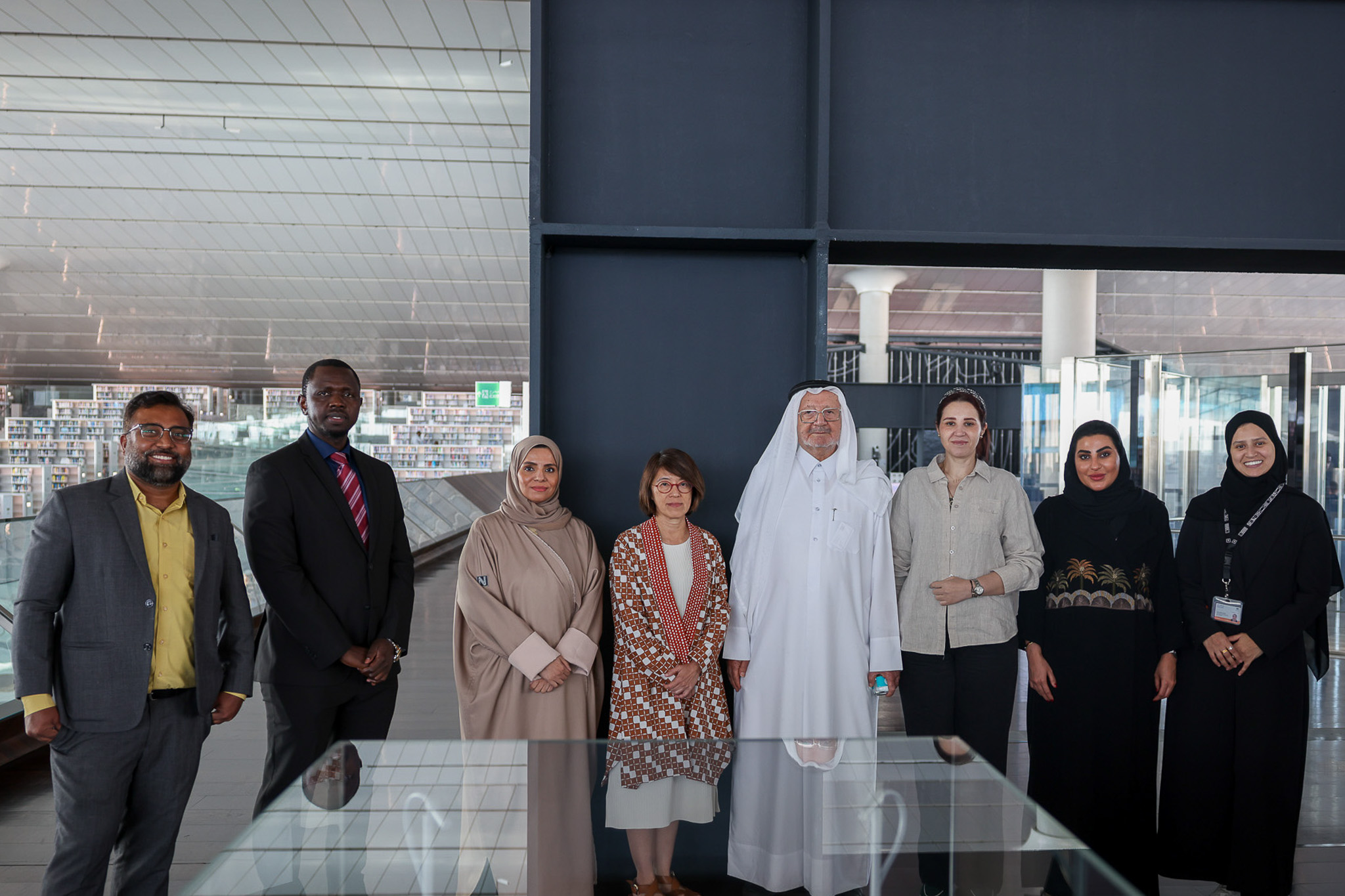
Qatar National Library has opened applications for the third cohort of its Research Fellowship Program, building on the achievements of its first two cycles. The program, which has attracted significant academic interest since its inception, offers researchers the opportunity to engage with the Library's specialized collections and contribute meaningfully to regional scholarship.
The launch event of the third cohort of the Research Fellowship Programme featured a keynote address by Professor Dr. Mustafa Aqeel Mahmoud, Professor of Modern and Contemporary History, former Head of the Department of History, and former Director of the Center for Documentation and Humanities Studies at Qatar University, entitled “Historical Writing: A Critical Perspective.” Dr. Mustafa Aqeel is one of the Gulf region’s leading historians and has received several prestigious State awards in recognition of his distinguished scholarly and research contributions in the fields of history, literature, and the humanities.
Showcasing the program's growing impact, the second cohort, now in progress, has broadened the fellowship's scope into three new areas. Hessa Al Mohannadi, Director of Legal Affairs at Qatar Tourism with a PhD in Gulf Studies from Qatar University, is investigating the impact of Qtel in Qatar during the 1980s. Jarmila Kodric, a Conservator at Qatar Museums and PhD candidate in Archival Studies, is conducting a heritage-based investigation into the transition from manuscript to print in Qatar. Meanwhile, media researcher Kaoutar Chatioui is exploring the impact of monetary transitions on commerce and daily life in Qatar between 1959 and 1973.
“We are proud to see this program grow into a genuine hub for regional scholarship. Each cohort has reinforced our commitment to giving researchers the access and support they need to explore Qatar’s history,” said Abeer S. Al Kuwari, Director of National Collections and Special Initiatives at Qatar National Library.
This ongoing research follows the success of the inaugural cycle, which drew over 60 applications and saw three fellows complete their terms. Abdelrahman Kamel produced a historical case study on the evolution of Qatari aviation diplomacy; Dr. Alieu Manjang’s research focuses on the curation and representation of Qatar’s social history; and Ghalia Al-Muhanadi investigated the regeneration of a sense of place through the activation of experiential qualities.
Dr. Eiman Saleh Al Shamari, Manager of National Collections at Qatar National Library, said, “The projects produced by our first two cohorts, from tracing Qatari aviation diplomacy to examining the impact of monetary transitions, show what researchers can achieve when given direct access to our specialized collections. The third cohort’s focus will open new lines of inquiry into Qatar’s social and economic heritage.”
Qatar National Library invites researchers to apply for the third fellowship term, which runs from 1 October 2026 to 30 March 2027. Project proposals of up to 2,000 words should align with one of three themes: social history, economic history, or natural resources management. Selected fellows will receive a dedicated research space, guided access to the Library’s collections, and a monthly stipend of QAR 6,000.
Applicants must be Qatari citizens or expatriates residing in Qatar for the duration of the program and commit 20 hours per week to in-person attendance. Upon completing the fellowship, participants must deliver a public presentation and submit a minimum 6,000-word research paper within one month of the program's conclusion.
The deadline to apply is 30 July 2026.


